General Contractors Glendale
Glendale, CA 91204


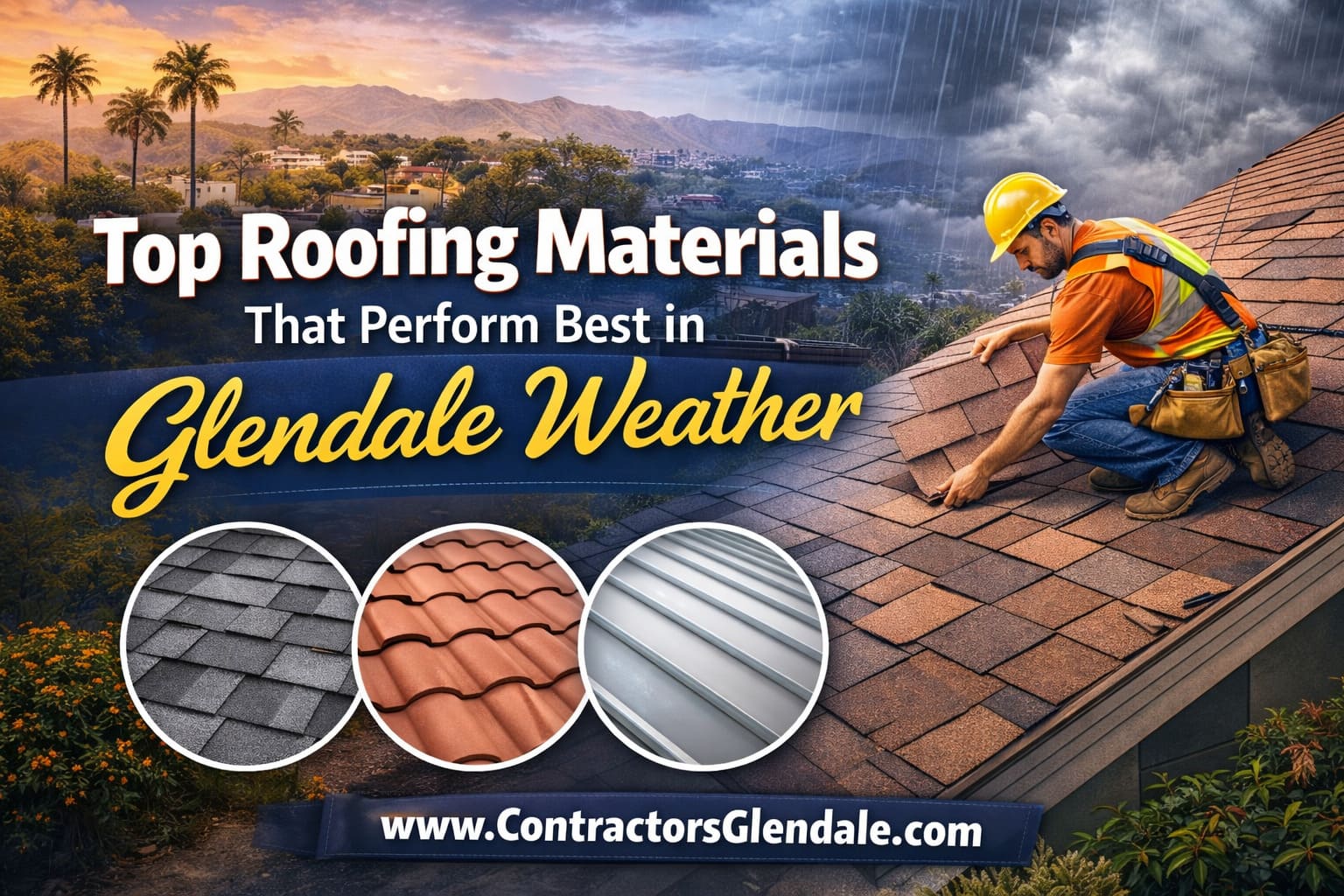
After replacing hundreds of roofs across Glendale over the past decade, We've learned what works and what fails in our unique climate. Whether you're protecting a 1920s Craftsman in Rossmoyne, a Spanish Revival in Oakmont, or a modern hillside home in Glenoaks Canyon, your roofing material choice isn't just about aesthetics it's about survival against Glendale's intense sun, Santa Ana winds, and our occasional but heavy rains. This isn't generic roofing advice this is specific knowledge gained from working on Glendale homes through every weather extreme our city delivers.
Before we dive into materials, let's understand what we're up against in Glendale:
285+ sunny days annually with intense UV radiation that degrades materials faster than most climates.
Summer temperatures regularly exceed 90°F, with roof surfaces reaching 150°F+ on dark materials.
Seasonal gusts up to 60+ mph that test wind resistance and fastener integrity.
When it rains, it pours. Proper drainage and waterproofing are crucial despite our dry climate.
A project that taught us this lesson: A homeowner in Adams Hill replaced their roof with mid-grade architectural shingles. The north side looked great after 10 years, but the south-facing slope was completely baked granule loss, cracking, and curling. The differential aging was dramatic. That's when we started recommending different materials or at least different warranties for different roof exposures in Glendale.
Here's the detailed comparison you need, based on installing all these materials on Glendale homes:
| Material Type | Cost per Sq Ft* | Glendale Lifespan | Key Advantages for Glendale | Potential Drawbacks Here |
|---|---|---|---|---|
| 3-Tab Asphalt | $3.50 - $5.50 | 12-18 years | Lowest initial cost, easy installation, widely available | Poor UV resistance, high heat absorption, shortest lifespan |
| Architectural Asphalt | $4.50 - $7.50 | 18-25 years | Better wind resistance, cooler options available, good value | Still vulnerable to sun damage, can be heavy when layered |
| Concrete Tile | $10 - $18 | 35-50 years | Excellent sun/heat resistance, fireproof, authentic look | Very heavy (requires decking reinforcement), fragile if walked on |
| Clay Tile | $15 - $30+ | 50-100+ years | Superior durability, natural cooling, historic authenticity | Extremely heavy, expensive, requires specialized installers |
| Standing Seam Metal | $12 - $20 | 40-70 years | Best for solar, excellent wind resistance, lightweight | Noise in rain, thermal expansion issues, higher skill installation |
| Stone-Coated Steel | $8 - $14 | 40-50 years | Tile appearance with metal benefits, good wind resistance | Color fading issues, fastener maintenance, limited styles |
| Natural Slate | $20 - $40+ | 75-100+ years | Lifetime material, unmatched aesthetics, fireproof | Extremely expensive, very heavy, requires structural upgrades |
| Synthetic Composite | $9 - $15 | 30-50 years | Lightweight, good UV resistance, realistic appearances | Limited track record, quality varies widely, can fade |
*Costs include materials and professional installation for typical Glendale home, excluding decking replacement or structural upgrades
1,500 sq ft ranch home: Asphalt shingles: $8,000-$12,000 | Concrete tile: $18,000-$28,000 | Metal: $20,000-$32,000
2,500 sq ft two-story: Asphalt shingles: $12,000-$18,000 | Concrete tile: $28,000-$45,000 | Clay tile: $45,000-$75,000+
3,500+ sq ft custom home: Premium options: $50,000-$100,000+ depending on complexity and materials
Let's look beyond the specs to real-world performance in our climate:
Best: White or light-colored metal, clay tile with air gap
Worst: Dark asphalt shingles without reflective granules
Clay tile can reduce attic temps by 20-30°F compared to asphalt
Best: Clay tile, slate, quality synthetic composites
Worst: Economy asphalt shingles, some metal coatings
UV degradation is the #1 roof killer in Glendale
Best: Properly fastened metal, interlocking tiles
Worst: Lightweight 3-tab shingles, poorly secured tiles
Wind warranties vary dramatically by installation quality
Best: Clay/concrete tile, metal, Class A rated materials
Worst: Wood shake (even treated), some composites
Fire insurance discounts available for Class A roofs
We learned about wind resistance the hard way during the 2023 Santa Anas. A tile roof we hadn't installed in Oakmont lost over 100 tiles because the previous contractor used the wrong fasteners. The homeowner thought they were saving money with a lower bid. The repair cost exceeded the original installation savings. Now we always use hurricane clips and specialized fasteners for tile in wind-exposed areas.
Glendale isn't one homogeneous city when it comes to roofing. Here's what we've learned working in specific neighborhoods:
The Historic Preservation Commission has strict requirements. For most homes, only clay tile or authentic cedar shake (with modern fire treatment) are acceptable. Concrete tile may be approved if it perfectly matches the original profile and color. Synthetic materials face scrutiny but can be approved with proper samples and justification. The approval process adds 4-8 weeks and requires detailed submittals. But the result preserves neighborhood character and often increases property value more than non-compliant materials.
Mission-style barrel tile (either clay or concrete) is expected. The challenge is matching the aged patina of original tiles when doing repairs or partial replacement. We often have to source tiles from architectural salvage or custom-blend new tiles to match. Proper installation with correct underlayment and battens is crucial for these heavy tiles. Many Oakmont homes need decking reinforcement before tile installation.
More architectural diversity means more options. Modern asphalt shingles, metal roofs, and synthetic materials are all common. The key consideration here is often solar readiness many homeowners in this area install solar within a few years of roof replacement. We recommend metal roofs or reinforced decking for easy solar installation. Also consider lighter colors to reduce cooling costs in these typically larger homes.
Weight is a major concern. Lightweight materials like metal or synthetic composites are often best. Tile may require expensive structural reinforcement. Access for material delivery and installation can be challenging we've used cranes for tile delivery on steep sites. Wind exposure is greater, so enhanced fastening systems are non-negotiable. Also consider wildfire risk many hillside homes benefit from Class A fire-rated materials.
A Glenoaks Canyon project highlighted these challenges: The homeowners wanted clay tile for aesthetics, but engineering calculations showed the existing structure couldn't support the weight. Reinforcement would have cost $35,000. We helped them choose a stone-coated steel that looked like tile but weighed 80% less. They got the look they wanted without structural upgrades.
As of 2026, California's energy codes significantly impact roofing choices:
We worked with a homeowner in Glenwood who chose a dark composite shingle that just met SRI requirements. Their summer cooling bills increased $120/month compared to their old lighter roof. After two summers, they added a reflective coating at additional cost. Starting with a more reflective material would have been cheaper and more effective.
With Glendale's abundant sunshine, many homeowners consider solar. Your roofing choice dramatically impacts solar installation:
Standing Seam Metal: Clamps attach without penetrations, longest roof lifespan matches solar system life
Concrete Tile: Special hooks available, durable enough for multiple solar removals/reinstalls
Clay Tile: Fragile, high breakage risk during installation, specialized installers needed
Slate: Extremely fragile, often incompatible with standard mounting systems
Asphalt Shingles: Standard mounts work but roof may need replacement before solar system
Synthetics: Varies by product some work well, others have limited mounting options
If you're considering solar within 5-10 years, choose your roofing material accordingly. We recommend: 1) Install solar-ready roofing even if not installing immediately, 2) Use materials with lifespans matching solar systems (25+ years), 3) Consider mounting system compatibility, 4) Document roof condition before solar installation for warranty purposes.
A client in South Glendale learned this lesson expensively. They installed premium solar panels on a 15-year-old asphalt roof. Three years later, the roof needed replacement costing $18,000, plus $4,500 to remove and reinstall the solar system. If they'd timed the projects together, they would have saved over $10,000.
With roofing, installation quality matters as much as material choice. After seeing both excellent and disastrous installations in Glendale, here's what to look for:
The most common mistake we see? Homeowners choosing based solely on price. A Rossmoyne homeowner saved $5,000 on a tile roof by choosing the lowest bidder. Two years later, tiles were sliding, leaks developed at valleys, and the manufacturer denied warranty claims due to improper installation. The repair cost exceeded the original savings, and they lost the material warranty.
Roofing warranties are complex and often misunderstood. Here's what matters in Glendale:
| Warranty Type | Typical Coverage | Glendale-Specific Issues | Our Recommendation |
|---|---|---|---|
| Material Only | Defects in manufacturing | Often excludes UV degradation claims common here | Minimum 30-year prorated, transferable |
| Labor Only | Installation errors by contractor | Should cover wind damage if installation caused failure | 10+ years, backed by contractor's insurance |
| System Warranty | Material + labor combined | Best option but requires certified installer | 25-50 years from manufacturer with certified install |
| Wind Warranty | Wind damage up to specified speed | Should cover Santa Ana wind speeds (60+ mph) | Requires specific installation methods |
| Algae Resistance | Stain resistance | Less critical in dry Glendale but still valuable | 10-15 years typical for quality shingles |
Different materials require different maintenance in our climate:
We recommend professional inspections every 2-3 years for most materials, annually for asphalt shingles over 10 years old. The small inspection cost ($200-$400) can identify minor issues before they become major leaks. Many Glendale homeowners neglect south-facing slopes because they're not visible from the ground that's where most sun damage occurs.
A Glenwood homeowner learned this the hard way. They hadn't inspected their roof in 8 years because "it looked fine from the ground." When we finally inspected, we found widespread underlayment failure under tiles that appeared intact. Water had been slowly damaging decking for years. The $400 inspection would have saved $12,000 in decking replacement.
After a decade of roofing Glendale homes, here are my specific recommendations:
For Historic Homes (Rossmoyne/Kenneth Village): Authentic clay tile if budget allows, high-quality concrete tile if not. Both require design review approval. Expect to pay 20-40% premium for historic compliance.
For Spanish Revivals (Oakmont/North Glendale): Mission-style concrete tile offers best value. Clay tile for premium installations. Ensure proper weight capacity and consider solar readiness if planning future installation.
For Modern Homes (Glenwood/South Glendale): Standing seam metal for solar readiness and contemporary aesthetics. Quality architectural asphalt shingles for budget-conscious choices. Light colors recommended for energy efficiency.
For Hillside Properties (Glenoaks Canyon): Lightweight metal or synthetic composites. Consider fire resistance ratings. Enhanced fastening systems mandatory for wind resistance.
For Budget-Conscious Replacements: Cool roof architectural asphalt shingles from quality manufacturers (Owens Corning, CertainTeed, GAF). Avoid 3-tab shingles they're false economy in Glendale's climate.
For Lifetime Ownership: Clay tile, slate, or copper. The high initial cost spreads over 50-100+ years. Ensure structural capacity and use specialized installers.
My strongest advice? Think long-term. A roof is a 20-100 year decision in Glendale. The extra $5,000-$10,000 for a superior material often pays back in longevity, energy savings, and reduced maintenance. And always, always hire a contractor with specific experience installing your chosen material on Glendale homes similar to yours.
If you're considering a roof replacement in Glendale and want to discuss your specific home, budget, and goals with someone who's worked on hundreds of Glendale roofs from Rossmoyne to Glenoaks Canyon, our roofing contractors are here to help. We offer no-pressure consultations to review your options and provide realistic cost estimates for materials that will perform in our unique climate.
With 10+ years of exclusive Glendale roofing experience, our contractors understand which materials perform best in our climate and how to install them properly. Get straight talk and local expertise.